
Snorkelling the Blue Lagoon at Padang Bai
By Gadink · 28 August 2026
Clear turquoise water, clownfish and turtles right off the beach. The best easy snorkel spot in Bali.
Snorkelling the Blue Lagoon at Padang Bai
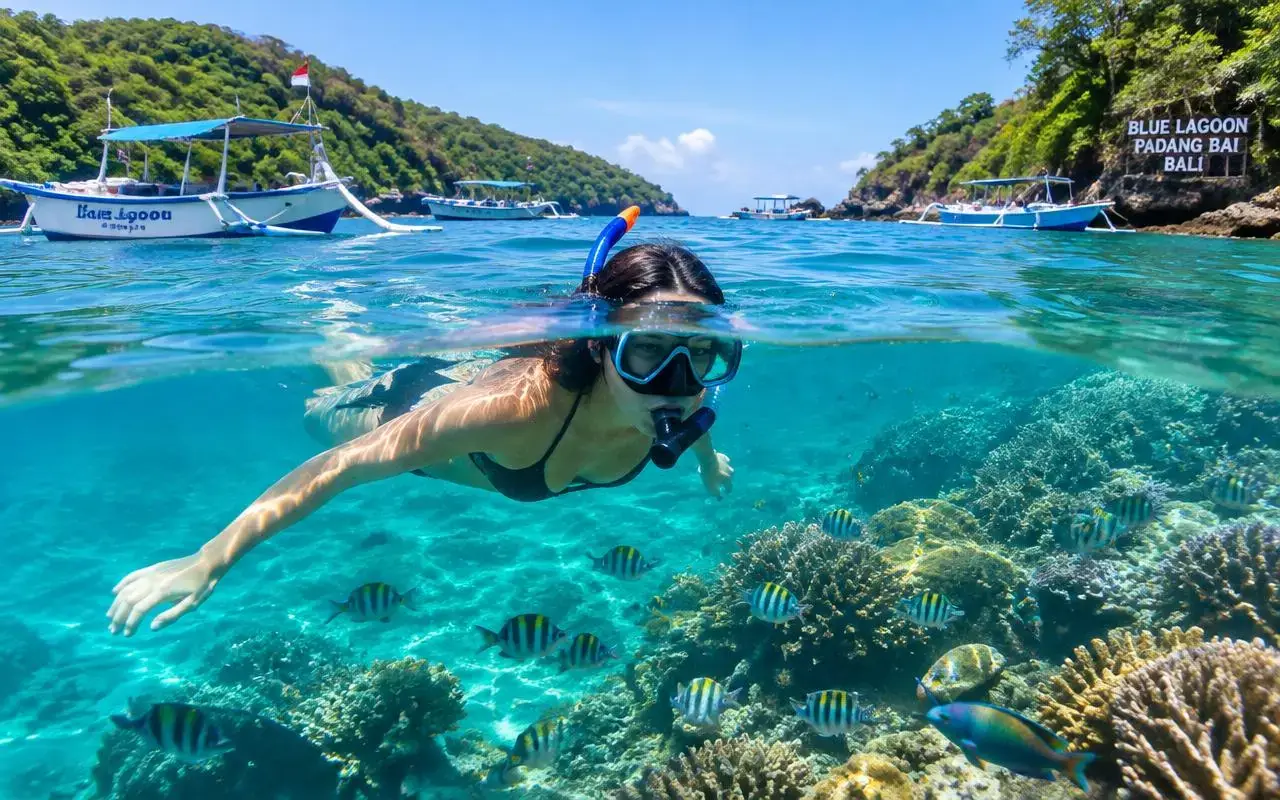
Imagine floating above a shallow reef, watching colourful fish weave between coral heads while Bali’s green coastline rises behind you. Blue Lagoon, a small bay near Padang Bai on the island’s east coast, offers exactly that kind of adventure when sea conditions are right. It is a lovely place to swap busy beach clubs and shopping streets for a mask, a snorkel and a closer look beneath the surface.
One of its attractions is the possibility of entering the water directly from the beach. You do not necessarily need a boat to enjoy the marine life here. However, shore entry is not always the easiest or safest option: waves, tide levels and underwater rocks can make a considerable difference. Local boat trips are another way to explore, often combining Blue Lagoon with nearby Tanjung Jepun.
With Exciting Bali Tour, you can plan the journey around more than a quick dip. Think an unhurried morning by the sea, time to dry off over lunch, and perhaps a scenic stop before heading back to your accommodation.
The secret is keeping the day flexible. Blue Lagoon is a natural marine environment, not a swimming pool, and the best experience starts with choosing suitable conditions rather than sticking rigidly to a timetable.
Where Blue Lagoon is and how snorkelling works
Blue Lagoon sits just beyond Padang Bai, a coastal town known for its harbour and ferry connections to Lombok. The snorkelling bay is separate from the main harbour, but this is still an active stretch of coastline. Stay aware of boats and follow local advice about where to enter, swim and exit.
The beach is relatively small, with sand, rocky sections and reef offshore. Depending on the tide and sea state, you may be able to walk into the water and begin snorkelling close to shore. Do not assume that a calm-looking beach means the whole bay is safe, though. Currents can be difficult to judge from land, especially if you are unfamiliar with the area.
Another option is a local snorkelling excursion by boat. Operators commonly visit Blue Lagoon and Tanjung Jepun, although the exact route should depend on conditions. A boat can provide access to different spots, but it does not remove the need for swimming confidence, suitable equipment and a clear safety briefing.
Before agreeing to an excursion, ask what is included: equipment, flotation aids, a guide in the water, boat transport and any meals or facilities. These arrangements vary between operators.
For the land journey, the Padang Bai private driver page is a useful starting point when considering how this coastal stop fits into your Bali plans.
What you might see beneath the surface
The pleasure of Blue Lagoon is often in the smaller details. Pause above a suitable patch of reef and you may notice fish that were almost invisible while you were swimming past. Clownfish can be seen sheltering among anemones, while parrotfish, butterflyfish and other reef fish bring flashes of colour to the underwater scenery.
Moray eels sometimes peer from crevices, and you may spot sea stars or other marine creatures on the seabed. A turtle sighting is possible, but it should be treated as a lucky bonus rather than a promised highlight. Wildlife moves freely, and visibility, water conditions and your route all affect what you see.
There is no need to chase anything. Slow movements and a little patience usually make for a more rewarding encounter. If an animal retreats, give it space rather than following it into shelter. Never reach into holes or beneath rocks, where sharp surfaces and hidden animals can cause injuries.
The reef is a living habitat, with coral cover and condition varying across the area. Avoid standing on coral, touching marine life or feeding fish, even if someone suggests it will improve your photographs.
If larger marine encounters are on your wish list, read the Nusa Penida manta ray snorkelling guide as a separate trip idea. It is a different outing, with its own sea conditions and planning considerations, rather than an extension of a Blue Lagoon beach visit.
Choosing the best time and conditions
Morning is often a sensible time to aim for. Winds may be lighter, the day is cooler, and getting an early start leaves room to adjust your plans. However, “morning” is not a guarantee of clear, calm water. Swell, wind direction, recent rain and tides can all influence the experience.
Bali’s drier months often make outdoor travel easier, but snorkelling conditions do not follow a perfect seasonal calendar. Good days can occur during wetter periods, and rough water can arrive during the dry season. Heavy rain may also affect visibility through runoff, so yesterday’s photographs are not a reliable forecast for today.
There is no single tide rule that suits every visitor and every entry point. Low water can leave shallow reef harder to cross without damage, while other stages of the tide may bring movement that is unsuitable for less confident swimmers. Ask an experienced local snorkelling operator to assess the conditions on the day.
Your driver can help with timing and practical arrangements, but the final decision about entering the sea should rely on current conditions and appropriate local water-safety advice. If the water looks uncomfortable, there is nothing disappointing about changing the plan.
Give yourself permission to enjoy lunch, explore the coast or visit an inland attraction instead. For broader preparation, these first-time Bali travel tips are useful alongside your snorkelling plans, especially if you are still getting used to travelling around the island.
Equipment, safety and looking after the reef
A comfortable mask makes an enormous difference. Before entering the water, check that it seals properly without being painfully tight, and make sure you understand how to clear water from your snorkel. If you are renting equipment, inspect its condition and ask for another size if anything feels wrong.
Rental equipment is commonly available through local providers, but availability, quality and inclusions vary. Bringing your own well-fitting mask can be worthwhile, particularly if you have struggled with leaks before. Fins should fit securely without rubbing, and any flotation aid should be appropriate for the activity and properly fitted.
Tell the operator honestly about your swimming ability. First-time snorkellers, children and nervous swimmers need suitable conditions and close supervision; a flotation aid does not make rough water safe. Stay with a buddy or guide, agree on a clear return point, and avoid drifting further out while concentrating on the fish.
If entering from shore, ask where the safest route is. Protect your feet where appropriate, but never use footwear as a reason to walk across coral. Keep fins clear of the reef, and float horizontally rather than kicking down into shallow areas.
Pack a towel, dry clothes, drinking water and a waterproof bag for valuables. A rash vest helps with sun protection and can reduce the amount of exposed skin needing sunscreen. Whatever product you use, do not assume a “reef-safe” label makes it harmless.
Finally, check that your travel insurance covers your planned activities. If you have a health condition that could affect breathing, swimming or exertion, seek medical advice before snorkelling.
Getting to Padang Bai without rushing
The drive to Padang Bai is part of the planning, not just a transfer to squeeze between other activities. Journey times depend on your starting point, traffic, roadworks and stops along the way. From southern Bali, allow a substantial part of the day for travel rather than assuming the distance on a map means a quick journey.
Staying in Sanur can make an east-coast outing more straightforward than starting in some of the busier resort areas further west. You can discuss a suitable departure time through the Sanur private driver page. Even then, leave a buffer rather than planning around a tight arrival time.
If you are based inland, a trip from Ubud is also possible. The Ubud private driver page can help you start a conversation about a route that suits your accommodation and the rest of your day.
A private driver is particularly useful when you have wet swimwear, towels and a change of clothes to manage. Before confirming anything, clarify the proposed hours, waiting arrangements, stops and what the transport quote includes. Snorkelling activities and equipment should be checked separately unless they are explicitly included.
For the return journey, avoid committing to an early dinner reservation or another time-sensitive activity. A little breathing room means you can rinse off, eat and travel back without turning a relaxed sea adventure into a race against the clock.
Making a memorable East Bali day of it
Blue Lagoon works beautifully as the main event. Snorkel while conditions are suitable, take time to change, then sit down for a proper lunch. Padang Bai has local places to eat, and you can ask what is freshly available rather than arriving with a fixed menu in mind.
Candidasa is another option for lunch and coastal scenery if you would like to continue east. It makes sense to choose somewhere along your agreed route rather than detouring simply to tick off another destination. After time in the sea, an easy meal and a shaded seat may be all the sightseeing you need.
For a more varied outing, consider Tirta Gangga, known for its ornamental pools, fountains and gardens. Combining the coast with the Tirta Gangga area can be rewarding, provided you allow for the additional driving and time to enjoy the grounds. Check current opening arrangements and entry requirements before travelling.
Lempuyang, often associated with the “Gates of Heaven” viewpoint, needs more careful consideration. It is not a quick stop next door to Blue Lagoon. Travel, site access arrangements and potential queues can take a substantial part of the day. If that photograph or temple visit is a priority, consider giving it a separate outing rather than rushing your snorkelling.
You will find more inspiration in the East Bali hidden gems guide. Choose one additional highlight, not every appealing stop on the map. For a longer holiday, the Bali highlight tour offers a starting point for spreading different experiences across your trip.
Message Gadink and start planning your Blue Lagoon trip
The best Blue Lagoon day is not necessarily the busiest one. It is the day when you arrive with enough time, enter the water only if conditions are suitable, and leave feeling that you have enjoyed the coast rather than hurried through it.
Gadink is the friendly local driver behind Exciting Bali Tour. You can get to know Gadink before discussing how a Padang Bai outing might fit your holiday. Share where you are staying, your preferred date, the number of travellers and whether anyone in your group is new to snorkelling.
It also helps to mention children’s ages, swimming confidence and any particular priorities. Perhaps you want a simple beach-and-lunch day, or perhaps Tirta Gangga is high on your wish list. Those details make it easier to discuss a realistic route.
Ask about transport arrangements, likely timings and which parts of the day need separate booking or payment. Keep the water activities flexible until local conditions can be assessed.
Ready for colourful fish, salty hair and a fresh perspective on Bali’s east coast? Message Gadink on WhatsApp through the contact option on the Exciting Bali Tour website to plan your Blue Lagoon trip.